
Low-ticket dropshipping is a grind. Thin margins, massive ad spend, and hundreds of orders just to clear a decent month. One bad ad cycle wipes out a week of profit.
High-ticket dropshipping flips that. Fewer sales, higher profit margins, and buyers who already expect to purchase online. It’s not a “get rich quick” growth hack that dropshipping entrepreneurs profess. It’s a fundamentally different model.
This step-by-step guide breaks down exactly how it works, what to sell, and how to build a high-ticket store that doesn’t require thousands of orders just to stay afloat.
Start High-Ticket Dropshipping for Free
Join 500,000+ entrepreneurs who use Zendrop to find products, fulfill orders, and scale their stores.
Get started for free →
Key takeaways
- High-ticket dropshipping means selling products priced $500–$5,000+ without holding inventory, earning $300–$500+ per sale instead of grinding volume.
- Start with validated demand using Google Trends or keyword tools, not gut instinct. Go niche to face less competition.
- Your Shopify store is your trust signal: professional design, clear return policies, and a visible phone number are baseline at this price point.
- Lead marketing with outcomes and value, not specs. Address “is this worth it?” directly on the page.
- Treat supplier relationships as a competitive advantage: they’re the foundation of a sustainable business.
What is high-ticket dropshipping?
High-ticket dropshipping is selling expensive products, typically $500 to $5,000+, directly from a supplier to the customer, without holding inventory.
That’s it. Same dropshipping model, different price tier and a fundamentally different profit structure.
What makes a dropshipping product “high-ticket”?
Three things dropshipping high-ticket items from the low-ticket items most dropshippers start with.
Bigger profit per sale: You sell fewer units, but each order brings in meaningfully more money. A single high-ticket sale might net you $300–$500 in profit, what a low-ticket store needs dozens of orders to match.
Buyers do research first: Nobody spends $800 on impulse. High-ticket customers compare options, read reviews, and evaluate your store before buying. That applies whether the product is physically large, like furniture or fitness equipment, or premium, like a $200 wool throw blanket.
Quality expectations are higher: A higher price point comes with higher standards. Customers expect reliable products, accurate descriptions, and responsive support.
Ready to start high-ticket dropshipping? Access trending products, sample ordering, and reliable fulfillment. Sign up for Zendrop for free →
High-ticket dropshipping vs High-profit margin dropshipping
High-ticket products means the products themselves are expensive: $500, $2,000, $5,000. Your margin percentage might only be 20%, but on a $2,000 item that’s $400 per sale. The dollar amount per transaction is the advantage. But some high-ticket products come with slim margins once you factor in supplier costs, shipping, and returns. Expensive doesn’t guarantee profit.
High-profit margin dropshipping means you’re keeping a large percentage of the sale price, regardless of what the product costs. A $50 product with an 80% margin nets you $40. The percentage is great, but the absolute dollar return is small and you need volume plus a trending, niche product to make it work.
The strategic question is simple: do you want fewer sales at higher dollar returns, or higher volume with better percentage margins?
High-ticket dropshipping bets on the first. That choice affects everything downstream: how much you spend on ads, how you create your store, and what kind of customer support you need to provide.
Expensive products don’t guarantee profit.
The benefits of high-ticket dropshipping
The core advantage is efficiency. With fewer orders to manage, you spend less time on customer service and logistics. That frees you up to focus on other time-consuming aspects of your online business: building a strong brand, developing relationships with quality suppliers, and creating a store that earns trust in a specific niche.
The result is a leaner, more sustainable operation, one that doesn’t depend on massive volume just to stay profitable.
The challenges of high-ticket dropshipping
High-ticket is more profitable per sale, but it’s harder to execute.
Marketing costs more upfront: Selling a $1,500 product requires more trust than selling a $30 one. That means higher ad spend, a more polished website, and stronger landing pages. Some suppliers also require minimum order quantities or charge more per unit before you’ve proven volume. The barrier to entry is still lower than traditional retail, but it’s not as cheap as launching a low-ticket store.
High-end products naturally attract fewer buyers. That means you need to be more intentional about targeting, nurturing, and re-engaging the audience you do have. You won’t see the same volume of repeat purchases either as these are investment pieces, not reorders. Customer service is the product.
Customers expect more: Someone spending $800+ expects fast shipping, clear communication, and easy returns. One bad experience leads to chargebacks, negative reviews, and real brand damage.
High-ticket sellers live or die by brand trust. At higher price points, customers need a reason to buy from you instead of an established retailer. Without strong branding, you’re just an unknown store asking for a lot of money.
Download the Ultimate 2026 Dropshipping Guide (For Free!)
Our beginner-friendly guide provides a proven blueprint for high-ticket dropshipping success.
Download for free
How to find profitable high-ticket dropshipping products
Product selection makes or breaks a high-ticket store. The goal is to find items and gadgets with proven demand, reliable suppliers, and enough margin to sustain your business.
Start with demand, not products.
Don’t pick a product and hope people want it. Use tools like Google Trends, Ahrefs, or SEMrush for search engine optimization (SEO) to check whether people are actively searching for what you want to sell.
Zendrop’s in-app trending products feature is another good starting point.

It surfaces what’s already gaining traction so you’re not guessing blind. Look for consistent search volume over time, not just short-lived spikes.
Go niche.
Broad markets are crowded and expensive to compete in. High-ticket works best when you focus on a specific segment: professional-grade home gym equipment, premium outdoor furniture, high-end standing desks, specialized photography gear.
Once you’ve picked the right niche, go deeper on product research. Use Google Trends and Amazon Bestsellers (filtered by price) to spot high-ticket items with consistent demand.
Look at what competitors are selling, how they’re pricing and positioning it, and where they’re falling short. These gaps are your opportunity.
Then run the numbers: factor in supplier cost, shipping, payment processing fees, and estimated ad spend to make sure the margins actually work before you commit.
For example, a standing desk that retails for $800 with a $500 supplier cost looks like a $300 margin, until you add $80 in shipping, $25 in payment processing, and $150 in ad spend to acquire the customer. Now you’re at $45 profit.

A product that looks profitable on the surface might not be once you account for real costs.
Zendrop also offers print-on-demand fulfillment, which opens up the option to sell high-end, custom-branded products without holding inventory or managing production yourself. It’s a way to add exclusivity to your store while keeping the dropshipping business model intact.
Vet quality before you list anything.
Customers spending $500+ expect a product that lasts. If you’re dropshipping something you’ve never seen or tested, you’re gambling with your reputation. Order samples when possible. Check existing reviews, product specs, warranties, and certifications. One wave of returns on a high-ticket item can wipe out weeks of profit.
Zendrop lets you order sample products directly so you can check quality, packaging, and shipping speed before you ever list an item.

Beyond samples, check existing reviews, product specs, warranties, and certifications. One wave of returns on a high-ticket item can wipe out weeks of profit.
Treat supplier vetting like a hiring process.
Your supplier is your fulfillment team. Their performance is your brand’s performance. Before committing, evaluate their shipping times, communication responsiveness, return and warranty policies, and production capacity.
A supplier who’s slow to respond before you’ve placed an order won’t improve after. For high-ticket dropshipping isn’t optional.
Related article: What is Print-on-Demand (POD)?
7 ways to succeed in high-ticket dropshipping
To truly thrive in the high-ticket dropshipping arena, you must embrace a mindset of continuous improvement and strategic foresight.
1. Earn customer trust on sight, on your site
Your online store is the single biggest trust signal you control. If it doesn’t feel premium, nothing else matters.
Start with a reliable platform like Shopify or BigCommerce. From there, focus on the things that move the needle: professional design, high-quality product images, detailed descriptions, and fast load times, especially on mobile.

Add clear return policies, warranty information, customer reviews, and visible contact details. These aren’t nice extras at this higher price point; they’re the baseline.
Tools like live chat, shipping calculators, and currency converters improve the buying experience, but none of them matter if the foundation doesn’t look and feel credible.
2. Market the value, not the product
High-ticket buyers need to believe the investment is worth it before they’ll spend $500, $1,000, or more. That means your copy must make a case for why this product solves a real problem or meaningfully improves their life.
Lead with the outcome, not the specs.
Say you’re selling a premium standing desk for $1,200. A feature-first description might read: “Height-adjustable frame, dual motor lift system, 70″ bamboo desktop.” That’s fine for a spec sheet, but it doesn’t sell.
A value-first version might say: “Stop ending every workday with a stiff back. This desk adjusts to you in seconds, so you stay focused longer and actually feel good by 5 PM.” Same product, completely different emotional response.
The specs still matter, but they belong below the fold, after the buyer already sees themselves in the outcome.
Address objections before they come up.
At this price point, hesitation is the default. Your product pages, emails, and landing pages should preemptively answer “why is this so expensive,” “is this worth it,” and “what if I don’t like it.”
Highlight warranties, return policies, materials, and real customer reviews, not as fine print, but as core selling points.
Use social proof with specificity.
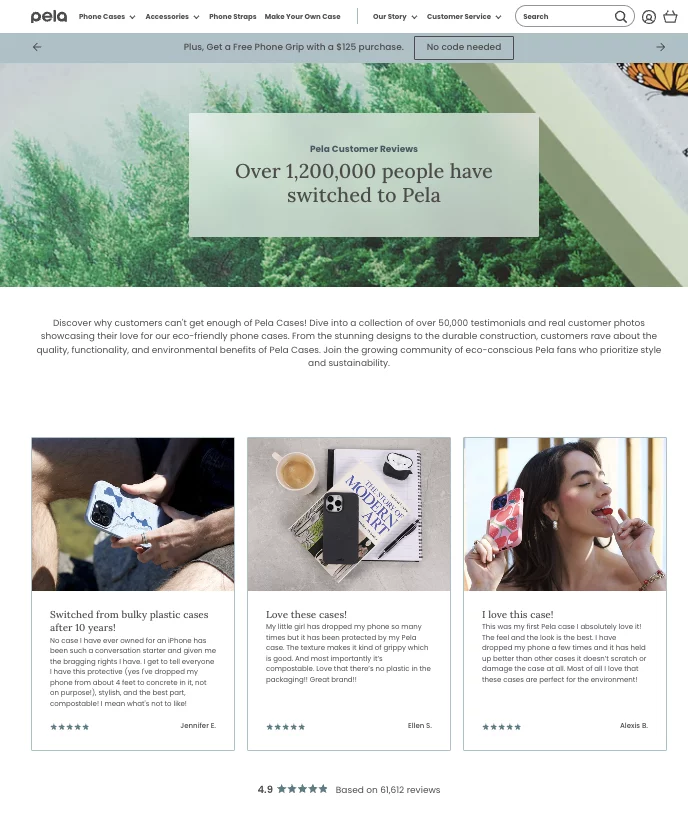
“Great product!” doesn’t move the needle on a $1,200 purchase. Testimonials that describe the before and after, like what the customer was dealing with, what they tried, and how this product changed things, carry far more weight. The more detailed and relatable the proof, the more trust it builds.
Write like you’re selling to one person, not a crowd.
High-ticket copy works best when it feels like a conversation with someone who understands the buyer’s problem. Speak directly to their situation, use their language, and don’t dilute the message trying to appeal to everyone.
3. Customer service is the product
How you handle questions, issues, and follow-up matters as much as what you’re selling.
Be proactive: send order confirmations, shipping updates, and delivery notifications without the customer having to ask.
Be reachable through multiple channels: email, live chat, phone if possible, and respond fast.
When issues come up, handle them with empathy and urgency. A smooth, hassle-free return process on a high-ticket item can actually build more trust than the original sale did.
And actively collect reviews and feedback after every purchase. It fuels social proof and shows you where to improve.
4. Make decisions from data, not assumptions
High-ticket margins give you room to optimize but only if you’re tracking the right things.
Monitor your core metrics: traffic, conversion rate, average order value, customer acquisition cost, and customer lifetime value. These tell you what’s working and where you’re leaking money.
Pay attention to which marketing channels drive sales, which products convert best, and where buyers drop off in your funnel. Then use A/B testing on ad creatives, landing pages, and emails to improve what’s underperforming.
At high-ticket price points, even small conversion improvements translate to meaningful revenue.
Related article: How to Price Your Product
5. Remove the high price barrier with financing
A $1,500 price tag stops some buyers but a $125/month payment plan doesn’t. Offering Buy Now, Pay Later options through services like Affirm, Klarna, or Afterpay lets customers break up the cost without you taking on credit risk.
Display these options clearly on product pages and at checkout, not buried in fine print. For very high-ticket items, traditional financing partnerships with lenders can work too.
Frame it as accessibility, not debt. When a customer sees a manageable monthly payment next to a large sticker price, the purchase shifts from “can I afford this” to “this is worth it.”
6. Your supplier relationship is your competitive advantage
In high-ticket dropshipping, your supplier’s performance is your customer’s experience. Treat that relationship accordingly.
Communicate regularly. Share feedback, flag potential issues early, and pay on time. The more reliable you are as a partner, the more likely you are to get preferential pricing, faster support, and early access to new products.
Look for collaboration opportunities too: custom packaging, exclusive products, or improved shipping arrangements that give your high-ticket dropshipping store an edge. And where possible, have a vetted backup supplier for your best-selling items. One supplier disruption shouldn’t be able to shut your business down.
7. The market moves, so move with it
What works today in high-ticket dropshipping won’t necessarily work in six months. Treat your business as something you’re constantly refining, not something you set up once and leave alone.
Stay current on industry trends, platform changes, and shifts in consumer behavior. Test new ad and marketing strategies, product lines, and site changes regularly.
Not every experiment will pay off, but the data from each one makes the next decision smarter.
Ready to start high-ticket dropshipping?
High-ticket dropshipping rewards fast execution, the right products, reliable suppliers, and a store that earns trust. Zendrop gives you the tools to get there: trending product discovery, sample ordering, reliable fulfillment, and a platform created for sellers who want to scale quickly.
Access trending products, sample ordering, and reliable fulfillment.
Sign up for Zendrop for free →
FAQs about high-ticket dropshipping
What is high ticket dropshipping?
High-ticket dropshipping means selling products typically priced $500 to $5,000+ directly from a supplier to the customer, without holding inventory. You make more per sale, sell fewer units, and avoid the volume treadmill that comes with low-ticket products.
How to do high ticket dropshipping?
To successfully engage in high-ticket dropshipping, follow a structured process:
1. Select a niche: Identify a specific market with demand for high-value products.
Research products: Find high-quality, durable, and in-demand, expensive items within that niche.
2. Vet suppliers thoroughly: Establish reliable partnerships that offer quality products, efficient shipping, and strong support.
3. Build a professional e-commerce business: Create a trustworthy and user-friendly online presence.
4. Implement targeted marketing: Use sophisticated advertising and content strategies to reach affluent and specific customer segments.
5. Provide exceptional customer service: Meet the elevated expectations of customers making significant purchases.
6. Leverage financing options: Offer BNPL or other payment plans to facilitate sales. By focusing on quality, trust, and strategic execution, you can establish a thriving high-ticket dropshipping business.
Is high ticket dropshipping profitable?
Yes, high-ticket dropshipping can be highly profitable. There are fewer sales, but each one is worth significantly more. A single high-ticket order can net what a low-ticket store needs dozens of sales to match. The model works when you pair strong product selection with reliable suppliers and marketing that strengthens trust.